Paratext collocation: Očerk razvitija zapadnych literatur – Moskva – Gosudarstvennoe učebno pedagogičeskoe izdatel'stvo – pp. 54-59
Paratext's typology: Teaching text (manual)
Author of the paratext: Friče Vladimir Maksimovič
Date of the paratext: 1934 [1928]
Title of the original work translated into Russian: Vita nuova
Publication date of the original work: 1294/1295
Country of the original work: Italy
Author of the original text: Alighieri Dante
Bio of the Author (original text): Dante Alighieri (1265, Florence - 1321, Ravenna) - Italian poet considered the father of the Italian language and the greatest of the three Florentine 'crowns' (Dante, Petrarch, Boccaccio). Author of the books Rime, Vita Nuova, Convivio, Fiore, Detto d'Amore, Commedia (in Vulgar Italian), De vulgari eloquentia, Monarchia, Epistole, Egloghe (in Latin). See https://www.danteonline.it/opere/index.php&; https://dante.dartmouth.edu/
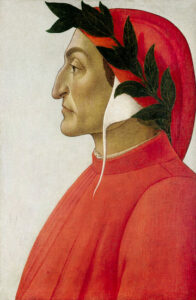
Author image:
Title of the Russian translation: Novaja žizn'
Collocation of the translation: Moskva – Academia
Translator's name: Èfros Abram Markovič
Translator's bio: Abram Markovich Efros (1888, Moscow - 1954, Moscow) - art critic, literary critic, translator, theatre historian, member of the administration of Moscow's most important museums in the 1920s. Already in his university years, he translated the Song of Songs from ancient Hebrew (1909), was the author of several translations from French and Italian, and composed essays on Aleksandr Pushkin, Michelangelo, Paul Valéry and other artists and men of letters. He was also the author of a collection of erotic sonnets (Eroticheskiye sonety, 1922). In the 1930s, Efros was chief editor of the Frantsuzskaya literatura series at the Academia publishing house. According to M. Rac, Efros' paratexts to translations of French works often represent small masterpieces (Rac 1989: 13). In 1937, he was arrested and sent into exile for three years in the city of Rostov Velikiy. In 1950, during the anti-Jewish repressions against the 'cosmopolitans', he was sent into exile in Tashkent, where he worked until his death as a professor at the State Institute of Theatre Art in Tashkent.
Curator of the Russian translation: Dživelegov Aleksej Karpovič
Russian translation publication date: 1934


Concise description of the paratext-directives' relation:
Dante is a poet of the decline of feudalism. The abstract character of VN as an expression of ascetic and aristocratic culture is emphasised; Boccaccio’s thesis on the historical reality of Beatrice’s prototype is unfounded; every feature of reality in the book is camouflaged; every feature of the everyday is obscured by a fog of mystery. The characteristic is part of the method considered in 1934 as ‘vulgar sociological’ (vul’garno-sociologicheskiy): D005; D007; D009; D014
Kristina Landa