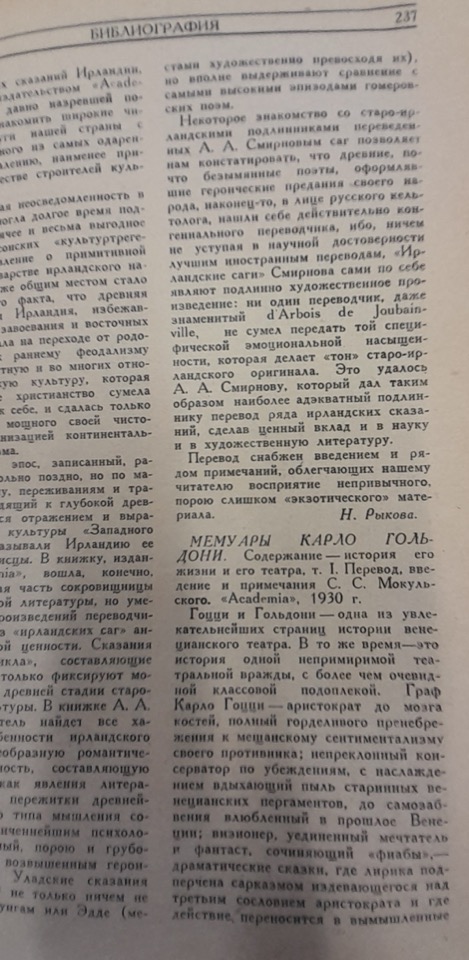
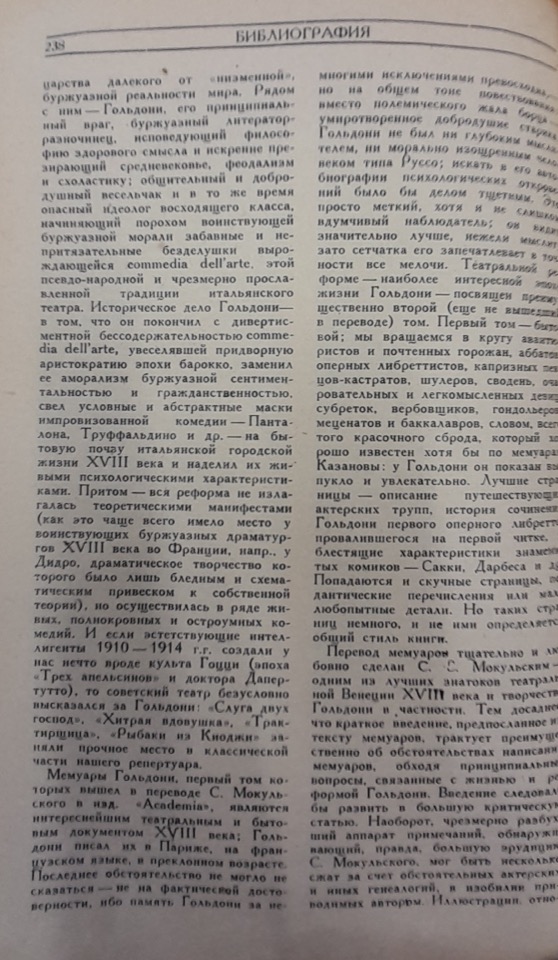
Memuary Karlo Gol’doni. Soderžanie – istorija ego žizni i ego teatra, t. I. Perevod, vvedenie i primečanija S.S. Mokul’skogo. “Academia”, 1930 g. [P017]
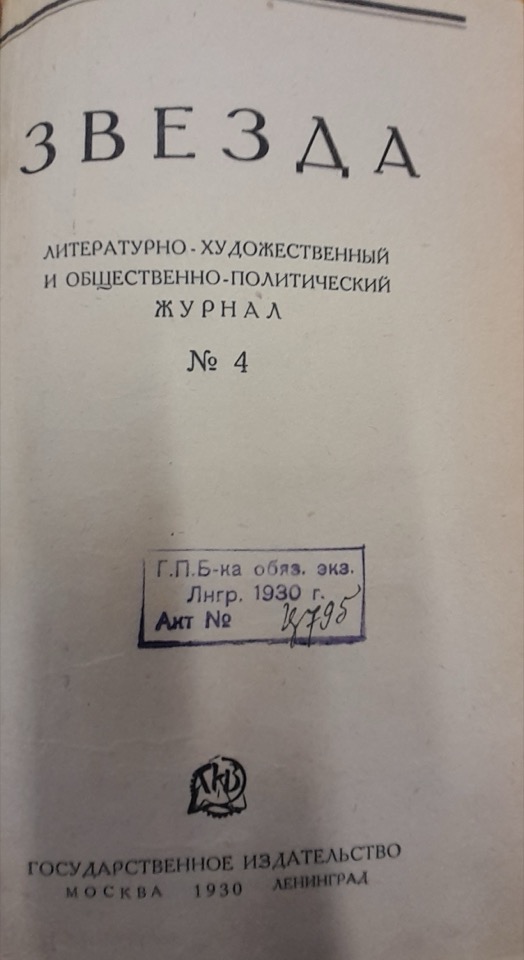
Paratext collocation: "Zvezda" [rivista], 4 - pp. 237-239
Paratext's typology: Review
Author of the paratext: Sollertinskij Ivan Ivanovič
Author's bio: Ivan Ivanovich Sollertinsky (1902-1944). Between 1921 and 1924 he studied Spanish literature and Romance-Germanic philology at the University of Petrograd. In 1923 he graduated from the Institute of the History of the Arts with a specialisation in Theatre History. He was one of the most important literary critics of the 1920s and 1930s and a teacher of Dmitry Shostakovich Bibliography: D.D. Shostakovich, Pis'ma I.I. Sollertinskomu, Sankt-Peterburg, 2006; B. Ya. Kantorovich, Sollertinsky: Ocherk Zhizni i tvorchestva, Vitebsk, 1997; CGALI SPb. F. R-259. Op. 2. D. 664; CGA SPb. F. Р-7240. Op. 5. D. 3992.
Date of the paratext: 1930
Paratextual directives:
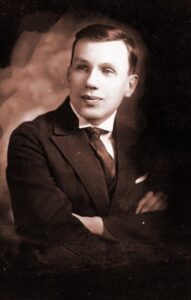
Author image:
Title of the original work translated into Russian: Mémoires, pour servir a l' histoire de sa vie, et a celle de son théatre
Publication date of the original work: 1787
Country of the original work: Italy
Author of the original text: Goldoni Carlo
Bio of the Author (original text): Carlo Goldoni (Venice 1707 - Paris 1793). Venetian Enlightenment playwright, reformer of the commedia dell'arte, best known for renouncing masks and developing character comedy. He made his debut on the Venetian stage in 1734, with the popular drama Belisario. His most famous comedies are Il servitore di due padroni, Il cavaliere e la dama, La famiglia dell'antiquario, Le femmine puntigliose, La bottega del caffè, Il bugiardo, I pettegolezzi delle donne, La moglie saggia, Le donne gelose, Le donne curiose, La serva amorosa, La locandiera, Le baruffe chiozzotte. Between 1745 and 1748 he practised as a lawyer in Pisa; in 1748 he returned to Venice. 1749 saw the beginning of Goldoni's fight against the Jesuit abbot Pietro Chiari, and then against Count Carlo Gozzi, a fervent supporter of commedia dell'arte. Gozzi publicly accuses Goldoni of being an incapable and immoral writer and even mocks him in his fables. Exhausted by this conflict, in 1762 Goldoni moved to Paris where he taught Italian to Louis XV's daughter; the French public, accustomed to the improvisation and masks of Italian theatre, did not welcome the reformer benevolently. Goldoni died at the height of the Revolution in poverty, deprived even of his small pension. Goldoni's theatre is characterised by greater realism than the earlier tradition; the comedies are intended for a large, unrefined, often uncultured audience. The language of the characters, which shifts from Italian to Venetian, escapes the literary models in use, revealing itself to be closer to that of the ordinary citizens of the Serenissima; the situations in the comedies are always determined by concrete social contexts (generally typical of the everyday life of the bourgeoisie of the North). Goldoni renounces magical plots and fairy-tale motifs in favour of references to the reality of the present moment, with all the details of simple settings (inn, fishermen's houses, piazza), often considered in the salons of the time as 'low' level. His plays always contain a moral (also made explicit in the author's introductions) and are never intended for pure entertainment; Goldoni hits out at various vices, including hypocrisy, and, while accepting social hierarchies, he praises fidelity to the values of the bourgeois tradition that, according to the author, everyone can follow in their own small way, namely reasonableness, honesty and industriousness.
Author image:
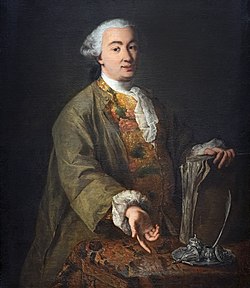
Title of the Russian translation: Memuary Karlo Goldoni, soderžaščie istoriju ego žizni i ego teatra
Collocation of the translation: Leningrad – Academia
Translator's name: Mokul'skij Stefan Stefanovič
Translator's bio:
Stefan Mokulsky (1896-1960). Translator, theatre historian and critic, lecturer of theatre history, head of the section of theatre theory and history at the Institute of the History of Fine Arts of the USSR Academy of Sciences. In 1918 he graduated from the Faculty of History and Philology at the University of Kiev, from 1923 he lived and worked in Leningrad, in the 1940s he moved to Moscow. He belongs to the Leningrad theatre school of Gvozdev. In the 1930s, he followed the trends of Friche's sociological criticism, whereas earlier he was accused of formalism. Between 1943-1948, he was director of the GITIS theatre in Moscow; during the same period, renowned scholars such as Dzhivelegov, Radzig, Gukovsky and others taught there. He was dismissed during the fight against the 'cosmopolitans' on the charge of 'anti-partisanship'. He is best known for his research in the field of Italian and French theatre of the Renaissance and the Enlightenment; in the field of Italian literature, in particular for his editing and translation of Goldoni's Memoirs, as well as for a series of studies dedicated to Gozzi and Goldoni.
Bibliography: Ju.B. Bolshakova, Zhizneopisanie S.S. Mokulskogo, sostavlennoe im samim (1921-1949) (po neopublikovannym arkhivnym materialam), in "Teatr. Zhivopis. Kino. Muzyka", 2013, № 4, p. 9-16; RGALI F. 2342. Op.1. S.S.Mokulsky, CGALI SPb. F. R-407. Op.1. D.207-212; CGALI SPb. F. R-371. Op. 2. D. 143. Mokulsky Stefan Stefanovich.
Curator of the Russian translation: Mokul'skij Stefan Stefanovič
Russian translation publication date: 1930


Concise description of the paratext-directives' relation:
Right from the start, the critic dwells on the story of the relationship between Gozzi and Goldoni, defining it as “a fascinating page in the history of theatre and at the same time a story of irreconcilable enmity”. Interesting is the comparison he draws between the “aesthetising intellectuals” of 1910-1914 who “created in us a sort of cult of Gozzi” (the era of Dr. Dapertutto’s “Three Oranges”, i.e. the director Vsevolod Meyerhold), and the socialist theatre that came out strongly in favour of Goldoni whose comedies took up an important place in the classical part of the Soviet repertoire. This comparison by Sollertinsky, who associates Gozzi’s theatre with Meyerhold’s pre-revolutionary activity, will later be developed by a critic in the period of the Great Terror that contributed to Meyerhold’s repressions: “Before the October Revolution,” one reads in the 20 December 1937 issue of Literaturnaya gazeta, “Meyerhold fought against realistic theatre by contrasting it with a theatre that was far removed from real life, the ‘theatre of masks’ and not of living images; it was a conventional, aestheticising, mystical and formalist theatre. After the revolution Meyerhold pursued the same wrong path. The story of Meyerhold’s theatre should serve as a lesson to those who still believe that works of art can be created for the people by persevering in detachment from life without paying attention to the voice of our immortal people” (D062).
Kristina Landa