Šoderlo De Laklo i “Opasnye svjazi” [P008]
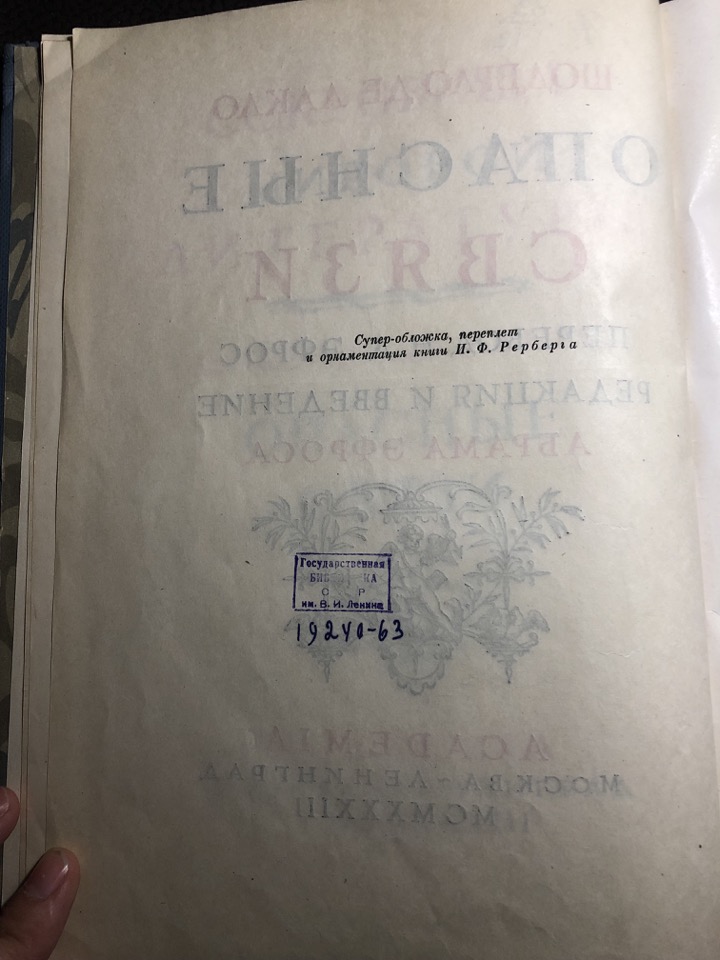
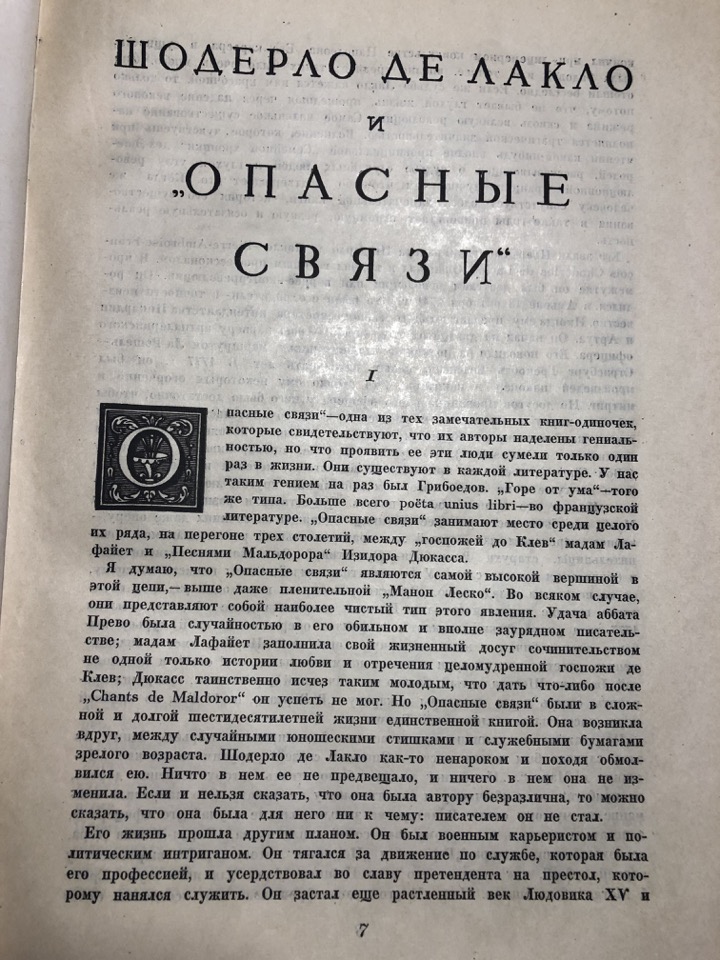
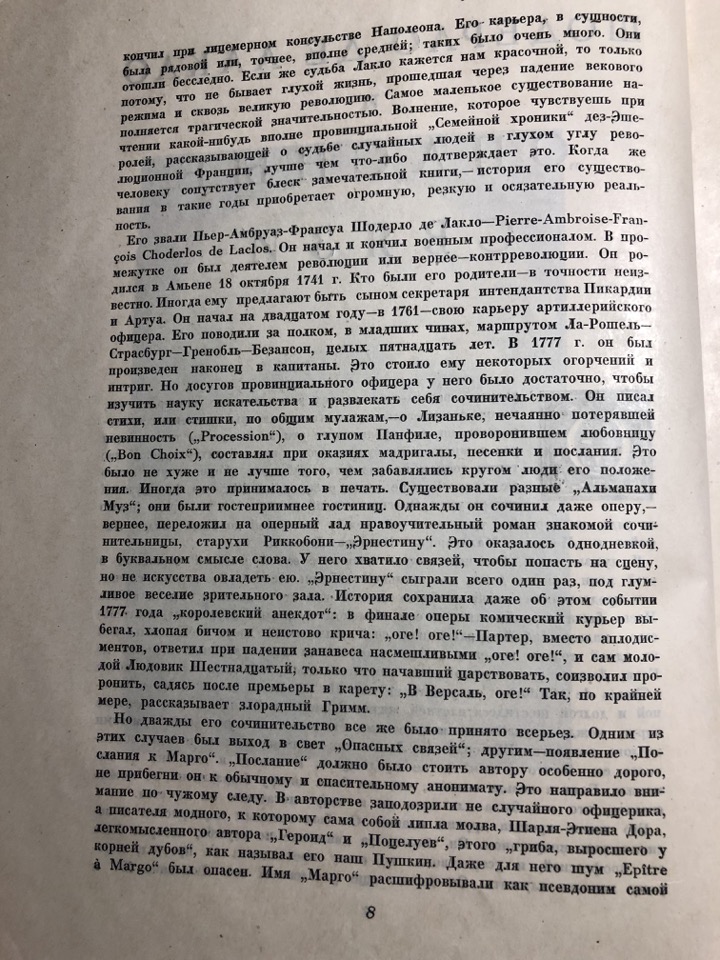
Paratext collocation: Opasnye svjazi [I parte] - Moskva - Academia - pp. 7-28
Paratext's typology: Preface
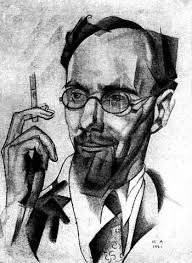
Author of the paratext: Èfros Abram Markovič
Author's bio: Abram Markovich Efros (1888, Moscow -1954, Moscow) - art critic, literary critic, translator, theatre historian, member of the administration of Moscow's most important museums in the 1920s. Already in his university years, he translated the Song of Songs from ancient Hebrew (1909), was the author of several translations from French and Italian, and composed essays on Aleksandr Pushkin, Michelangelo, Paul Valéry and other artists and men of letters. He was also the author of a collection of erotic sonnets (Eroticheskiye sonety, 1922). In the 1930s, Efros was chief editor of the Frantsuzskaya literatura series at the Academia publishing house. According to M. Rac, Efros' paratexts to translations of French works 'often represent small masterpieces' (Rac 1989: 13). In 1937, he was arrested and sent into exile for three years in the city of Rostov Velikiy. In 1950, during the anti-Jewish repressions against the 'cosmopolitans', he was sent into exile in Tashkent where he worked until his death as a professor at the State Institute of Theatre Art in Tashkent. Bibliography: O. Lekmanov, Efros A.M., in Mandelstamovskaya enciklopediya, Moskva, Politicheskaya enciklopediya, 2017, t. 1, p. 569; P. Nerler, Mandelstam i Efros: о prevratnostyakh netvorcheskikh peresecheniy, "Nashe nasledie", 114 (2015), pp. 38 -52; R. Timenchik, Iz Imennogo ukazatelya k Zapisnym knizhkam Achmatovoy: A. Efros, "Literaturnyi fakt", 3/17 (2020), рр. 292-301; RGB. F. 589. Efros Abram Markovich
Date of the paratext: 1933
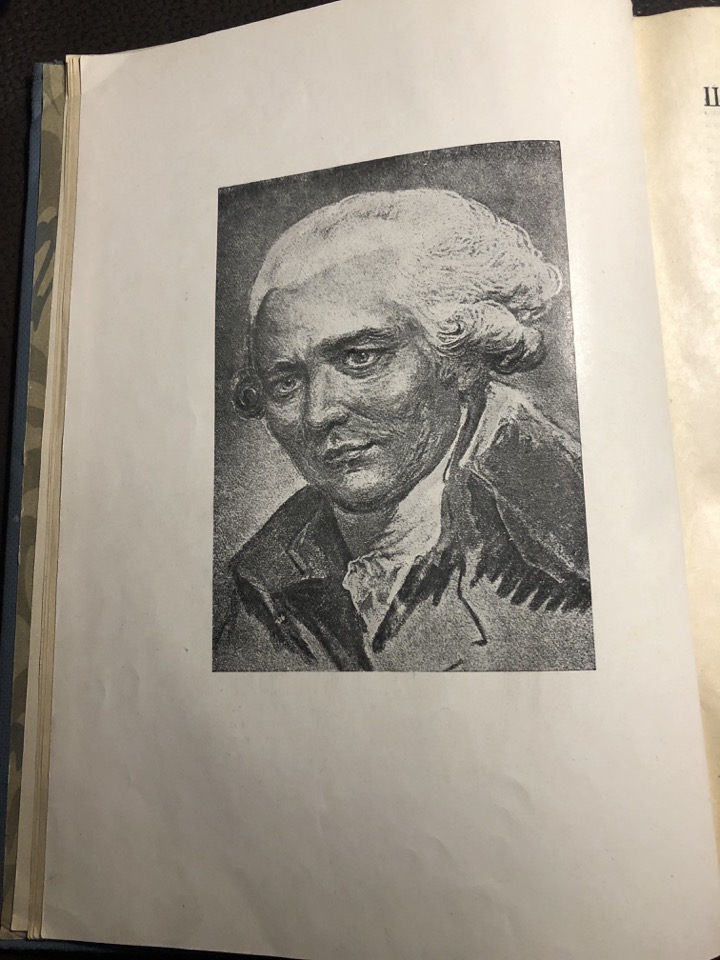
Author image:
Title of the original work translated into Russian: Les liaisons dangereuses
Publication date of the original work: 1782
Country of the original work: France
Author of the original text: Laclos Pierre-Ambroise-François Choderlos De
Bio of the Author (original text): French writer, born in Amiens on 18 October 1741, died in Taranto on 5 September 1803. From a family of recent nobility, he pursued a military career and became an excellent artillery officer; secretary to Philippe d'Orléans, during the events of the French Revolution he sided with his faction against the first-born branch of the Bourbons, later siding with the republicans. Imprisoned twice during the revolutionary years, he managed to avoid the guillotine thanks to his artillery skills. He returned to service under Napoleon. He was the author of the epistolary novel Les liaisons dangereuses, the "libertine novel par excellence" according to Laurent Versini's definition, a work that illustrated the licentious customs of the ancien régime nobility by creating the diabolical literary couple Viscount de Valmont - Madame de Merteuil; the novel caused an immediate stir (it was often read by contemporaries as a work à clé) and was condemned in France for immorality from 1823 to 1825, although it went through numerous editions throughout the 19th century. A fundamental book for future French literature, from Stendhal to Beaudelaire to Marcel Proust, this work remains the only authentic literary success of Laclos, who was also the author of the essay Essai sur l'éducation des femmes (1786), first published only in 1908.
Author image:
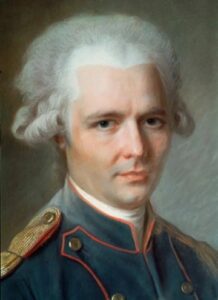
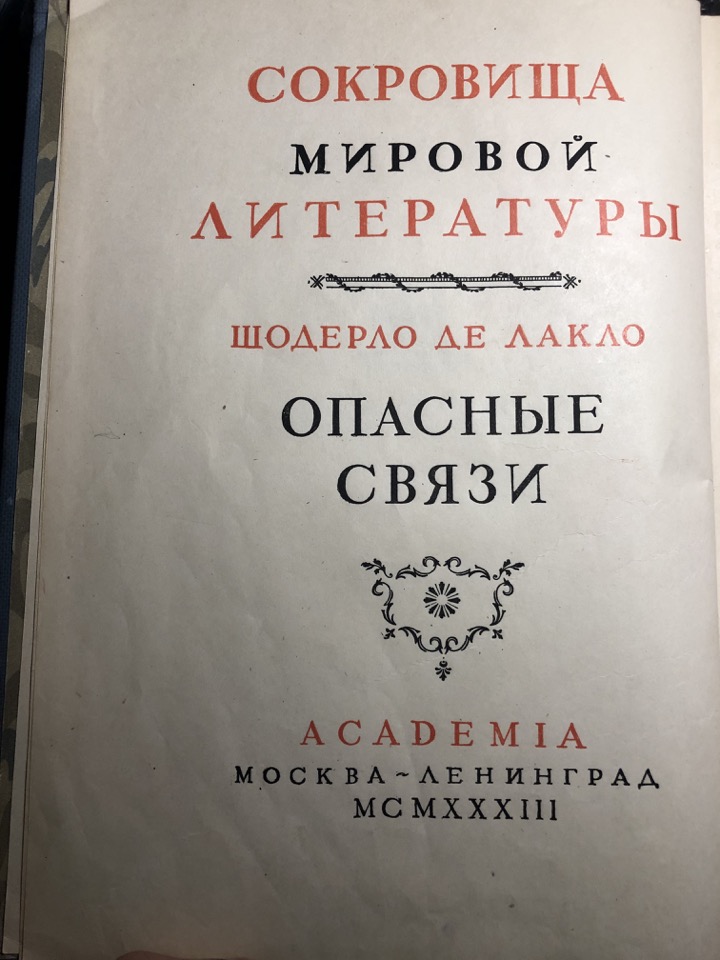
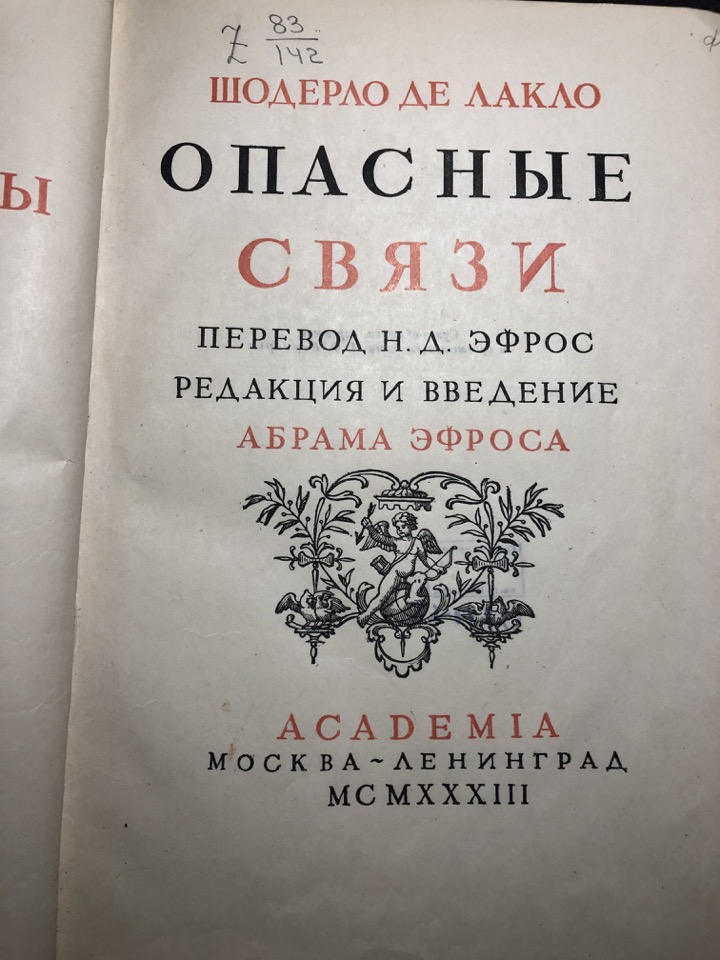
Title of the Russian translation: Opasnye svjazi
Collocation of the translation: Moskva – Academia
Translator's name: Natal'ja Davydovna Èfros
Translator's bio: Natalya Davydovna Efros (née Galperina), wife of Abram Efros. Born near Voronezh in 1889, died in Moscow in 1989. In 1916, she graduated from Moscow University with a degree in History, and already as a student she did literary translations from French, eventually becoming a professional translator. In addition to this activity, from the 1920s onwards she also worked as a teacher at various Soviet institutions and institutes; from the end of the 1920s onwards she was intensively involved in publishing, working as an editor for "Literaturnoye nasledstvo" (1933-1941). During the war she took nursing courses and was then evacuated to Uzbekistan. She returned to Moscow in 1943, where she resumed editorial work (1946-78, in the editorial office of "Literaturnoye nasledstvo"), from '45 also at Sovinformbyuro. From 1954 to 1978 she worked for the Institut mirovoy literatury. She also resumed her work as a literary translator (translating Victor Hugo and Anatole France); in the 1970s she wrote a memoir about her husband A.M. Efros, republished in 2018 under the title Vospominaniya raznych let (Moskva, Noviy chronograf).
Curator of the Russian translation: Èfros Abram Markovič
Russian translation publication date: 1933


Concise description of the paratext-directives' relation:
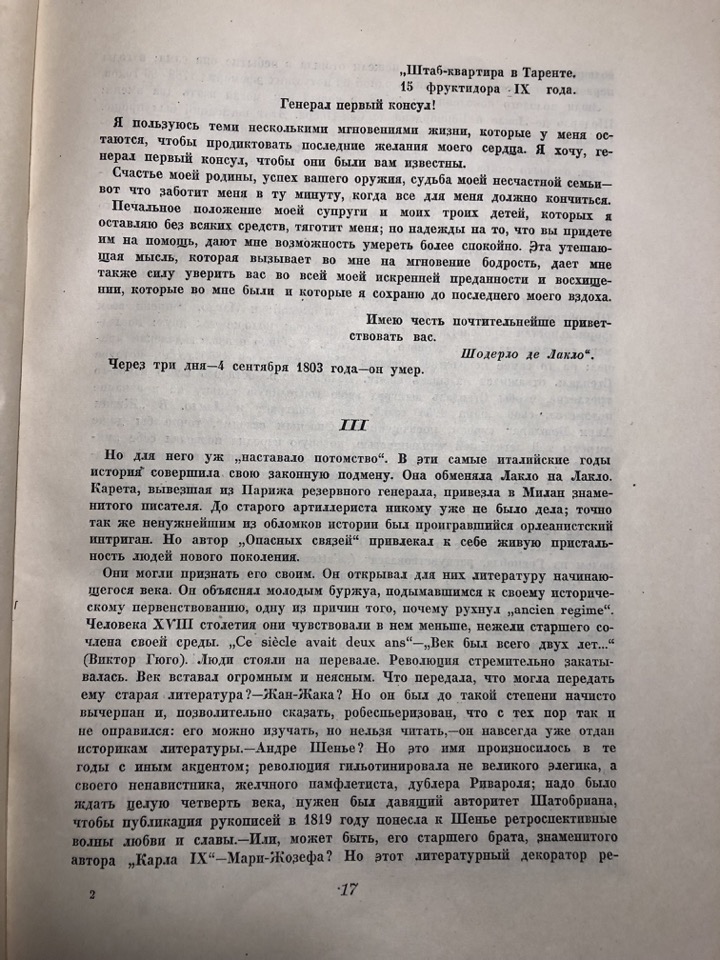
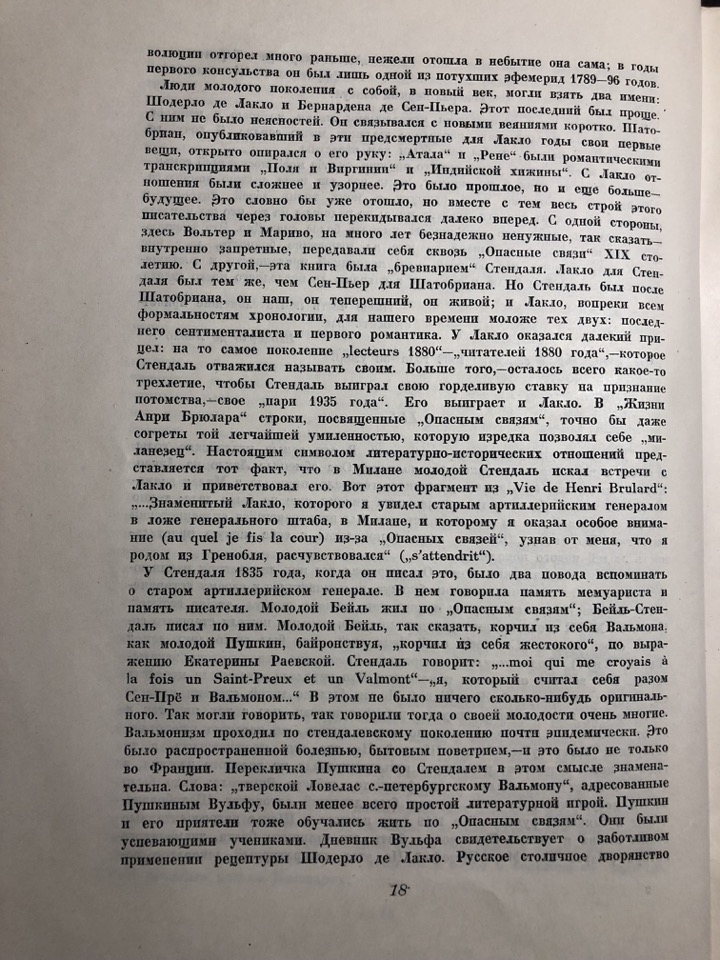
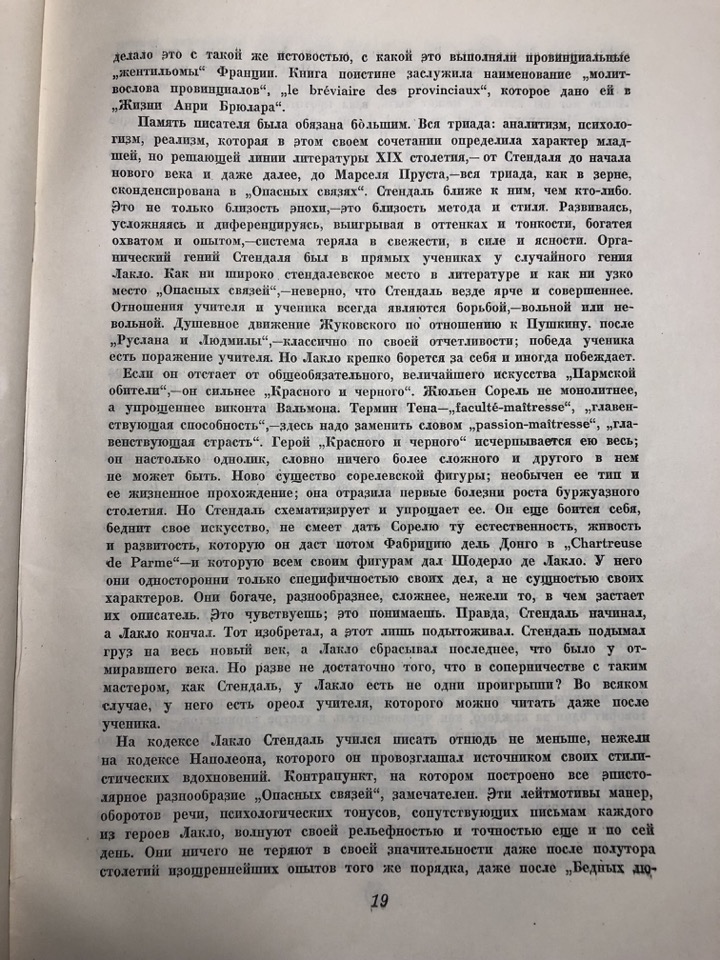
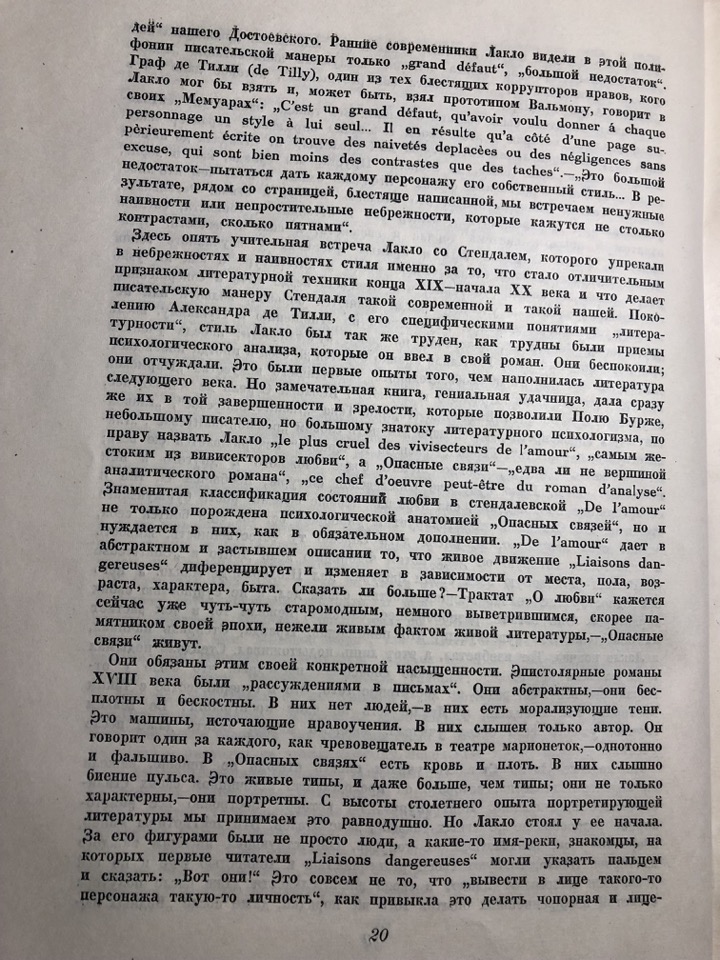
The Academia Opasnye sviazi edition is the first complete publication of Laclos’ novel Les liaisons dangereuses in 20th century Russia. There was a first, partial publication in 1930 by Federatsiya. Following the closure of this publishing house in July 1932, Efros resubmitted the introductory article he had edited for the previous edition for inclusion in the 1933 edition of Academia (with minor changes). The visa to print the work only arrived in November 1933. The translation is once again by Natalja Efros, wife of Abram Markovich. In presenting Pierre Ambroise Choderlos de Laclos to the Soviet reader in Efros’s lengthy article, we note some key elements that could be recurrent and productive in this type of paratext in the early Stalinist years:
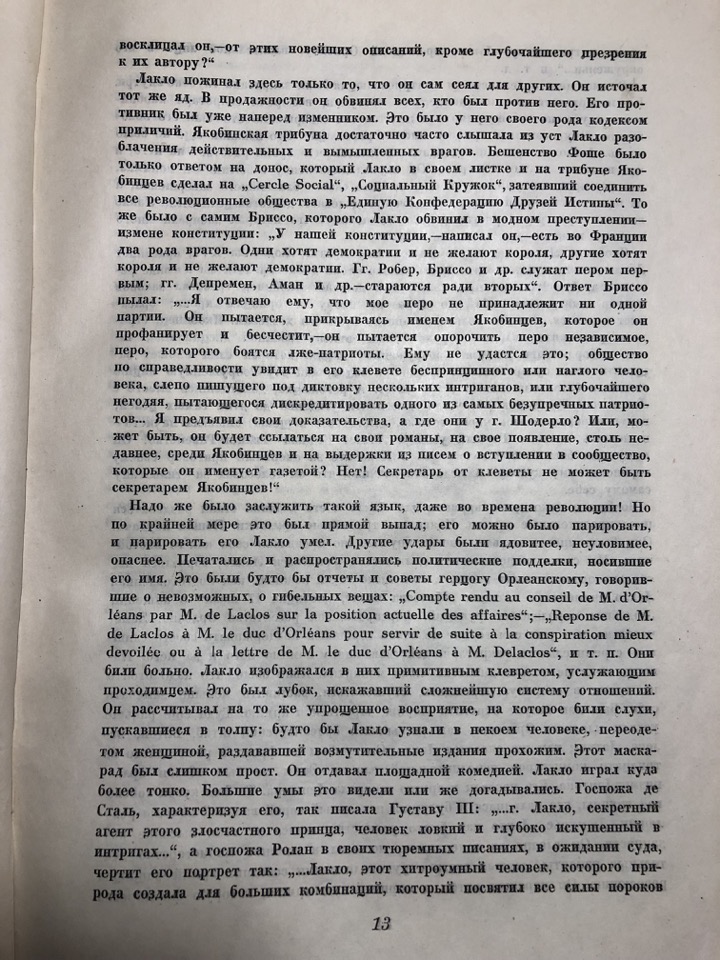
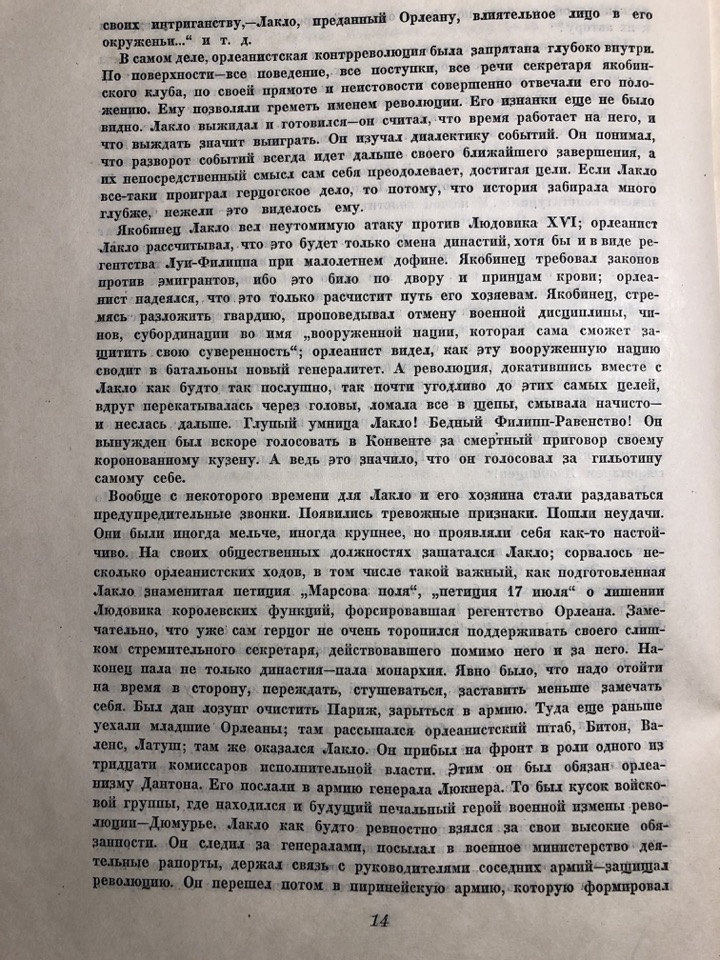
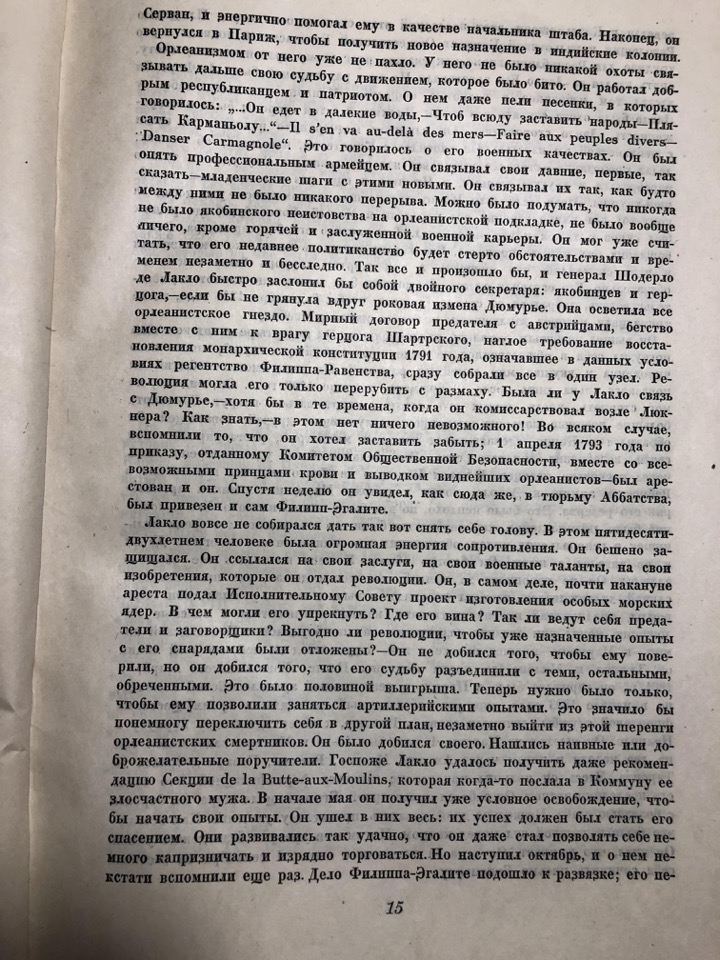
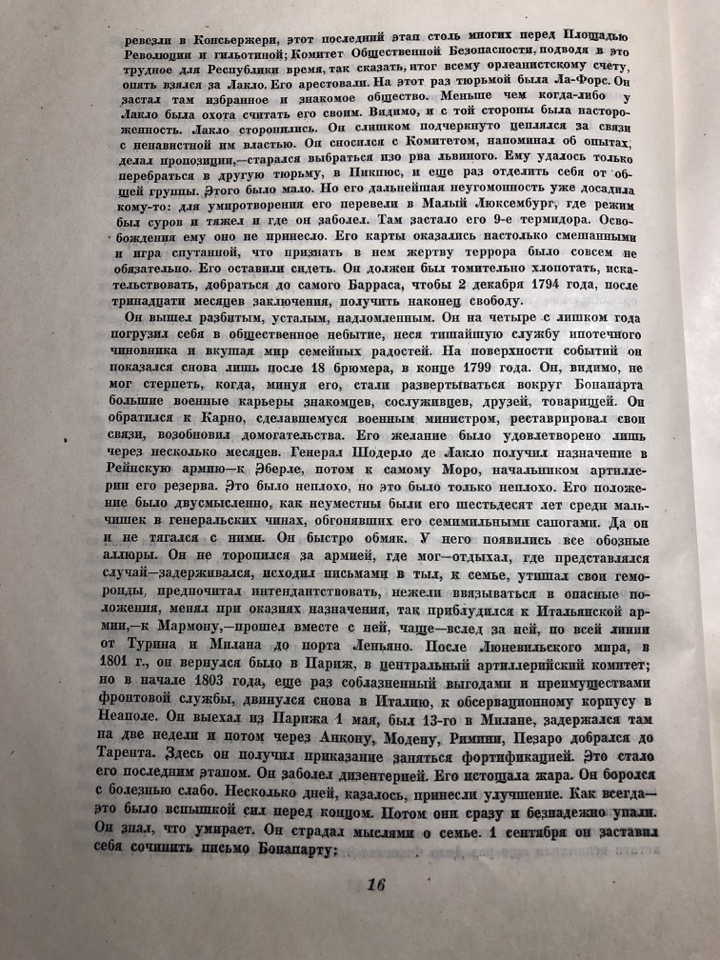
–charakteristika of the author [i.e. a predominantly biographical approach], with the reconstruction of the writer’s life, in which his social background is naturally indulged; in particular in his portrait of Laclos, Abram Efros glosses over certain aspects, preferring not to make explicit the noble lineage of the author of the Liaisons dangereuses (he came from the small provincial nobility), rather highlighting his military ambition and his role in the army: “His name was Pierre Ambroise Choderlos de Laclos. He began and ended his career as a professional soldier”. Not being able to deny Laclos’s role at the time of the revolutionary events, in which he favoured and supported the Orléans faction, Efros chooses to proceed according to the usual and consolidated technique of captatio benevolentiae towards the Soviet censorship, which had to allow both the publication of the book and its introductory article, so that right from the very first page he denounces the lack of political reliability of the French writer, who could certainly not be called a Jacobin: “he was a man of the revolution, or rather of the counter-revolution […] a military careerist and a political intriguer”; again, quoting Madame de Staël, Efros writes that Laclos was a “secret agent of that unfortunate prince, a man of great dexterity and profound skill in intrigue”. In such an apparently disparaging approach, we can identify certain stylistic features that are often repeated in the paratexts of the Academia publishing house’s intellectuals towards books or authors judged to be ‘controversial’ (in this case, a libertine book), i.e. the use of strategic, deliberately and openly insulting epithets about the writer who, we should remember, had well chosen to publish: epithets such as ‘kar’erist’, ‘intrigan’, up to ‘sekretniy agent’ (this same epithet, for instance, was used almost simultaneously by Dzhivelegov towards Giorgio Vasari, in his introductory article to the Lives in Russian translation, in which he was called the ‘yurkiy agent’ of Cosimo I, see Vazari 1933). In any case, with remarkable skill and autonomy in his article, Efros demonstrates a profound sympathy for his Orleanist anti-hero, later even subjugated to Napoleon, and, although he cannot make him a friend of Robespierre, he repeatedly emphasises his technical skills, his technical-scientific background, his intelligence as a gifted, zealous and professional craftsman, a master in the manufacture of deadly and innovative things; Laclos, the Soviet reader is gladly reminded, was a useful person in the revolutionary cause: accused, on the verge of risking his head “he defended himself like a lion. He insisted on his merits, his military talent, the inventions he had put at the disposal of the Revolution. In fact, almost on the eve of his arrest, he had presented the Executive Council with a project for the manufacture of naval ordnance”.
The ample space that Efros devotes to Laclos’ vicissitudes during the ‘bourgeois revolution’ and the reconstruction of his life are also functional to the legitimisation of the publication itself: the fact that Academia was translating and publishing a libertine book (among other things, not simply within the Frantsuzskaya literatura series, but within the higher Treasures of Universal Literature series) was proof, on the one hand, that the editors of Academia, advised in those very months by Lunacharsky and Gorky was proceeding to publish, albeit in a small way, the “3% of poisonous books” that were nevertheless indispensable for the future development of Soviet literature and the education of the future virtuoso writers of the dictatorship of the proletariat (see Rolet 2024, RGALI, F. 1303 op. 1 ed. chr. 597); on the other hand, the article, delivered to the publishing house in July ’32, a few months after the Postanovlenie of April 23, ’32, which disbanded the various literary groups and strengthened the Soyuz pisateley, with the ensuing discussions on the role of literature and literary criticism in the various press organs, produced numerous debates on new and old themes in Soviet literature and on the importance of the revival of the past and history within the new Soviet literature (D109): “The present stage of development of Soviet literature is also characterised by the fact that some writers have set themselves the task of developing the themes of the historical past, both near and far, in a new way, i.e. of developing them in the way necessary for the present historical moment, for the proletarian cause. One looks at ‘yesterday’ from the point of view of the Revolution”). Èfros, while always avoiding (and one must give him credit for this) directly quoting this or that directive, and mentioning Marx only once in his entire article, naturally finds himself within this dialectic; it is therefore certainly with this in mind that, with a certain virtuosity, he goes so far as to directly link the plot of the novel Liaisons dangereuses (fictio) to the real events of the French revolution and Laclos-man of action, as if the former were a sort of ‘preview’ of the latter: “is like a sequel to his famous book, but reorganised in a political key. When approaching the story of Laclos’s struggle for the crown of Orleans, one seems to read the plot of a possible continuation of Dangerous Liaisons, the outline of an unfinished book, where the characters and actions have taken on a much larger dimension. And again: “The heroes of the novel Dangerous Liaisons had acted on the field of personal battles. But now they have been reincarnated as figures of the Revolution, and have entered the sphere of great historical events. Laclos held all the threads of Orleanist strategy and tactics in his hands, pulling them to his liking”. Discussions on the role of the classics for Soviet literature were not yet ripe, but they would become more stringent with the first ever publication of Marx and Engels’ German Ideology (1932 for the first time in German, and in 1933 in Russian), and with the long articles on Nasledstvo e novatorstvo that would be published following Stalin’s Report Itogi pervoy pyatiletki of 7 January 1933 (D088), and later, with the debate that was to arise in the pages of the journal “Literaturniy kritik”; but as early as ’31-’32, the need to bring Laclos, too, back into the ranks of the ‘treasures’, the ‘classics’ of 18th-century literature became apparent. In addition, Laclos, as well as Richardson (often cited by Anisimov and Professor Shiller in those years), had been disruptive and innovative in the form and content of the epistolary novel of the 18th century and in their attempt to emphasise the emancipation of the bourgeoisie from the aristocratic class in their works. In particular, Laclos, as E. Knipovich would later point out in his review of Opasnye svyazi (1933), reserves the role of ‘positive character’ for the bourgeois Madame de Tourvel alone, while the nobles Merteuil and Valmont are ‘monsters’. The reflection on the decadence – gnilost’ according to a term often used in Soviet criticism at the time – of the Ancien régime seems obvious (as well as partial and far too coarse: what about the albeit noble D’Anceny, certainly not a negative character within the novel?), and will lead the article’s author to naturally cite its influence in Stendhal and – above all – in a certain Pushkin (another element of Captatio benevolentiae).
In his introduction, therefore, Efros essentially resorts to the biographical approach (already present indeed in the early 20th century French works of Émile Dard and Adolphe Van Bever, the latter published several times during the 1920s, to which Èfros probably had access thanks to his stay in Paris in 1927), and to the Marxist interpretation of the events of the novel’s characters, also included in the natural historical evolution that would lead from the Ancien régime to the bourgeois revolution; at the same time he purges his article of any reference to plot, love-strategy, or the erotic-sentimental novel (it was preferable not to do so, given the predictable negative judgement – in terms of the Marxist approach – to all that is aesthetisation or literary representation of eros – D019), and this too, we note, is an undeniable talent in the packaging of useful and virtuosic literary reticence (we could speak of a peculiar technique of Omission operated by the most audacious – or powerful – of the authors of these Stalinist paratexts). Efros then concludes with a seductive aphorism from Beaudelaire: “Революция была сделана сластолюбцами” (“la Révolution a étée faite par des voluptueux”), which allows him to claim that Laclos’s novel is a true ‘history book’.
Alessandra Carbone